A Different Sort of Space
Status: Environmental art-direction lineage. These principles guide playable atmosphere; they do not establish setting physics or require a particular renderer.
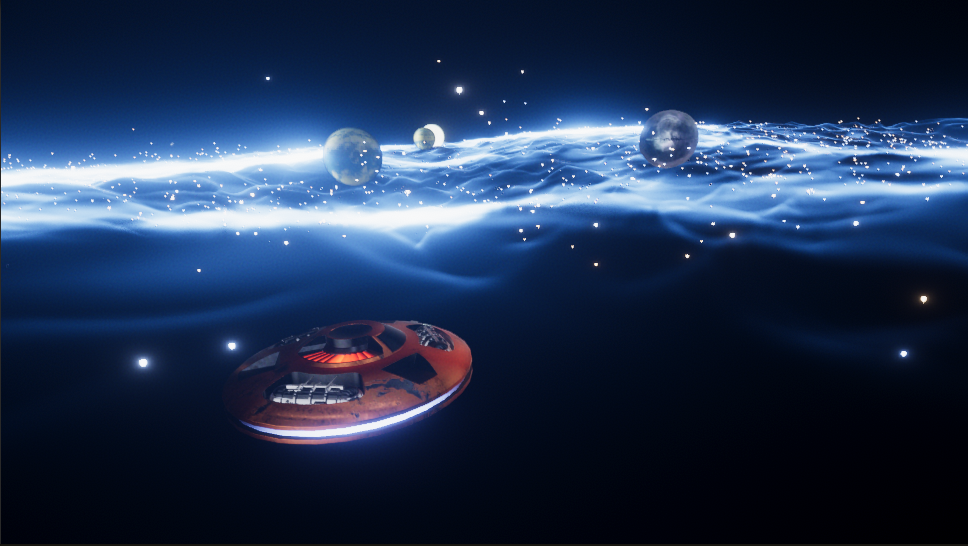
Historical prototype art. Its atmosphere is design evidence, not current canon or a required implementation.
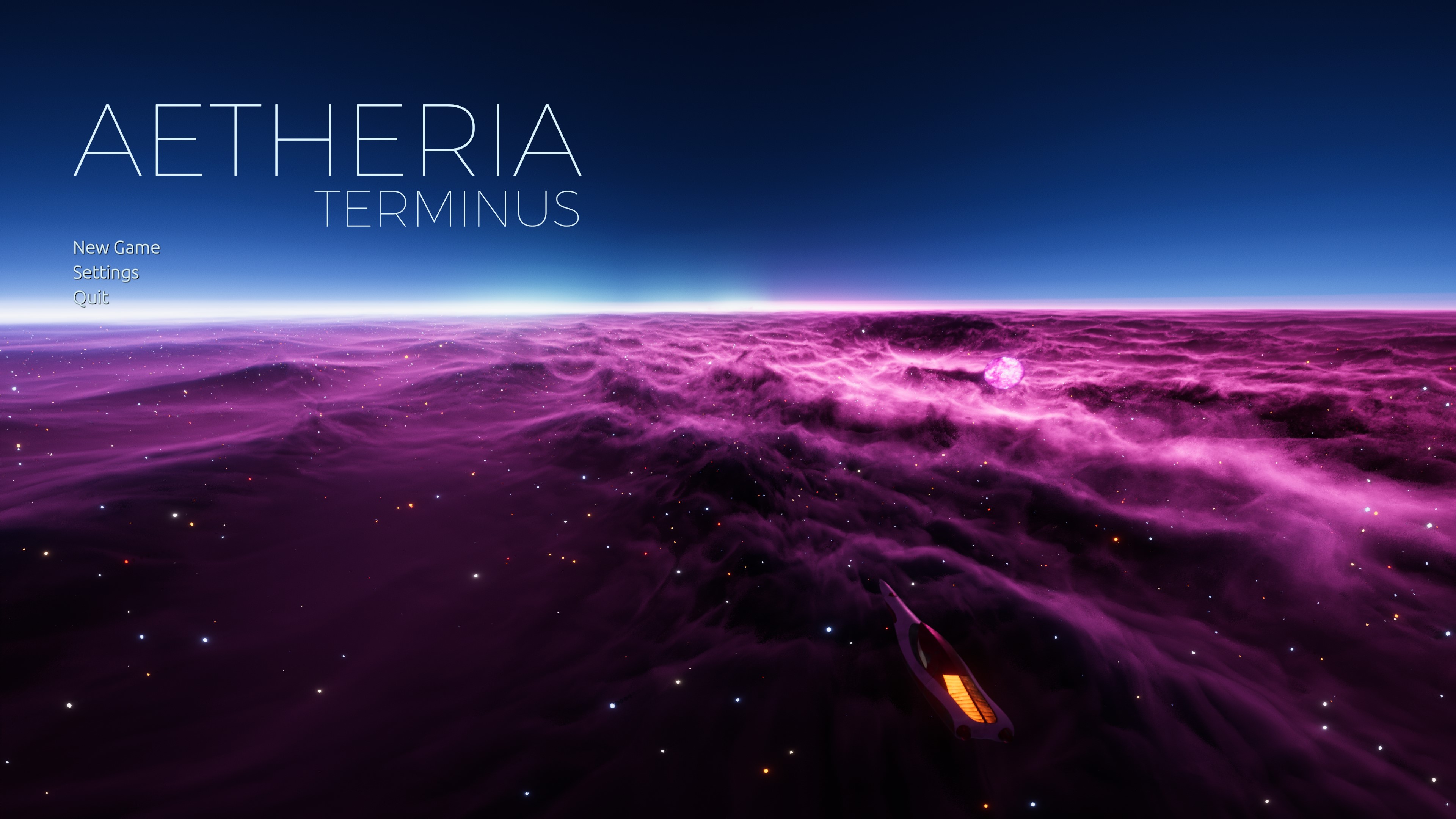
Historical Grid prototype. The interface and depicted environment are non-canon; the surviving idea is space as readable terrain rather than empty backdrop.
Aetheria uses space to establish scale, risk, and political geography. It can be road network, weather, hiding place, market boundary, or obstacle. Spectacle earns its place when it changes what the player notices or chooses.
The tone is era-sensitive. Pre-Elysium space may be austere and hard: darkness, glare, orbital geometry, drive plumes, radiators, debris, and infrastructure carrying most of the image. Instrument overlays can make invisible forces legible without implying that the overlay is a substance in the world.
Post-Elysium space may become luminous, dreamlike, and physically expressive where current canon supports it. Nebular surfaces, Aetheric fields, impossible weather, and gravity architecture can make the void feel almost inviting. Their strangeness still needs stable affordances and material consequences.
Across both regimes, four principles hold:
- Awe: scale and beauty should make travel worth undertaking.
- Readable danger: spectacle must reveal or frame local risk rather than conceal it.
- Consistent affordance: repeated shapes, motion, and effects should teach reliable expectations.
- Local identity: routes and regions should differ through infrastructure, environment, use, and history rather than palette alone.
The void should invite travel while making distance, exposure, and local danger felt. Wonder earns its scale by preserving consequence.